
A fence crosses your boundary. A driveway clips the corner of your lot. Your neighbor insists an old tree marks the property line, but your deed suggests otherwise.
When I assess how to resolve a property line dispute without court, I do not start with accusations or demolition threats. I start by preserving evidence, confirming the legal boundary, and identifying the correct remedy.
That last point matters. A disagreement about where the boundary sits differs from permission to use another person’s land. Both differ from permanently transferring part of a parcel.
Because boundary laws vary by state, have a local real estate attorney review any final agreement before signing or recording it.
Stop the Dispute From Getting Worse
Do not immediately move the fence, tear down a shed, block a driveway, or cut mature landscaping. Those actions can escalate the conflict and create additional claims.
Photograph the disputed area from several angles. Save dated messages, construction plans, permits, previous surveys, contractor estimates, and real estate documents. Write a simple timeline showing when you discovered the issue and how both owners responded.
Send your neighbor a calm written notice stating that the boundary is disputed and must be professionally verified. Avoid admitting that an existing fence or hedge represents the legal line.
Adverse possession rules are not uniform across the United States. Washington, for example, generally requires ten years of qualifying possession and several specific legal elements. Other states use different periods and standards.
Step 1: Audit Your Property Records

The first formal step in how to resolve a property line dispute without court is creating one reliable evidence file.
Gather your recorded deed, full legal description, title policy, subdivision plat, prior surveys, recorded easements, and any previous boundary adjustments. You may also need documents from earlier owners.
Search the county recorder’s records for your parcel and the neighboring parcel. Look for quitclaim deeds, corrective deeds, access agreements, easements, or boundary line documents that may not appear in your closing folder.
Do Not Rely on Online Parcel Maps
County GIS and assessor maps are useful research tools, but they rarely prove the exact legal boundary.
Beltrami County, Minnesota, expressly warns that its parcel maps are not surveys and should not be used to locate property lines or corners. The county notes that displayed lines may differ significantly from actual surveyed boundaries.
Treat an online parcel line as a clue. Do not use it to place a fence, accuse a neighbor of encroachment, or calculate the disputed area.
Check for Existing Easements
A driveway, utility line, drainage pipe, or walkway may cross your property legally under an easement.
In that situation, the boundary may not be wrong. Your neighbor may simply hold a recorded right to use part of your land.
Read the easement’s legal description, purpose, location, maintenance obligations, duration, and termination terms. When an outdated access right causes the conflict, review how to remove an easement from a property deed before promising that the use can end.
Step 2: Hire a Licensed Land Surveyor

A licensed land surveyor examines deeds, plats, monuments, field evidence, prior surveys, and surrounding parcels. The surveyor then provides a professional opinion about the boundary’s location.
Cache County, Utah, advises property owners that determining actual property boundaries is the responsibility of a licensed land surveyor.
Verify the surveyor’s active license through the relevant state licensing board. Give the surveyor every document you found, including records that appear inconsistent.
Ask for:
- Clearly marked property corners
- A signed boundary survey or plat
- The legal basis for the boundary opinion
- An explanation of missing or conflicting monuments
- A calculation of the encroached area
When both owners have competing surveys, ask the surveyors to compare their evidence. Hood River County, Oregon, recommends direct discussion between surveyors as an early method of resolving conflicting boundary opinions.
Step 3: Make a Written Proposal
After the survey, arrange a calm discussion in a neutral setting. Bring one organized evidence packet rather than several folders of unrelated paperwork.
Your proposal should answer five questions:
- Which survey or legal description will control?
- Which fence, structure, driveway, or feature must change?
- Who will pay for the work?
- When will the change occur?
- Which legal document will confirm the settlement?
Offer practical choices instead of making one rigid demand. The owners might split the cost of relocating a fence. One owner might pay because that owner installed it. A structure could remain temporarily under a written license until replacement becomes practical.
A choice-based proposal often makes how to resolve a property line dispute without court more manageable. It protects both titles while reducing the urge to “win” the first conversation.
Keep every offer in writing. Mark settlement discussions as proposals rather than final admissions, and have a local attorney advise you about wording.
Step 4: Use Mediation Before Arbitration
When direct discussions fail, mediation is usually the next sensible step.
A mediator is a neutral person who helps both sides communicate and search for an acceptable agreement. The mediator does not decide who owns the disputed strip. New York’s court system specifically notes that mediators help parties reach their own resolution and may be especially useful for disputes between neighbors.
Prepare a short mediation file containing:
- Both deeds and legal descriptions
- Survey reports and photographs
- Repair or relocation estimates
- Earlier written proposals
- Your preferred outcome
- Two acceptable alternatives
Discuss more than the position of the line. Cover maintenance, drainage, construction access, future repairs, deadlines, costs, future buyers, and recording requirements.
Arbitration is different. An arbitrator may make a binding decision when the owners have agreed to that process. Arbitration can avoid a traditional trial, but it also gives the parties less control over the result.
For neighbors who must continue living beside each other, mediation normally deserves the first attempt.
Step 5: Choose the Correct Settlement Document
A handshake may end the argument today, but it may not protect either owner during a future sale.
The document must match the legal problem.
Boundary Line Agreement
A boundary line agreement may work when the location of the line is genuinely uncertain or disputed and state law permits the owners to establish it by agreement.
Washington law, for example, allows qualifying property owners to record a written document showing their agreement about the location of a disputed boundary.
The agreement should contain an accurate legal description and usually relies on a licensed survey.
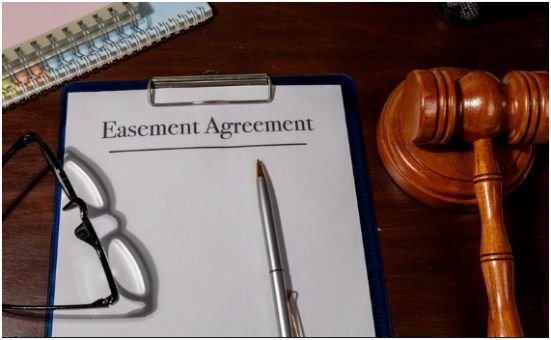
License or Easement Agreement
A license may permit limited or temporary use without transferring ownership. For example, a written license might allow an existing fence to remain until a scheduled replacement date.
An easement creates a more durable property-use right. It may be appropriate for shared driveways, drainage systems, utilities, or permanent access.
Do not casually grant an easement to solve a small inconvenience. Easements can affect future owners and property transactions.
Deed or Lot-Line Adjustment
When the owners intend to transfer part of one parcel to another, a boundary agreement alone may not be enough.
The process could require local land-use approval, a new survey, updated legal descriptions, a deed, and recording. Utah’s 2026 recording standards distinguish boundary establishment from boundary adjustment, which relocates a known common boundary.
Have a real estate attorney draft or review the final instrument. Record it in the county where the property is located.
Recording places the document in the public land records and provides notice of interests affecting the property.
A Worked Boundary Dispute Example
Suppose a survey shows that your neighbor’s fence sits 18 inches inside your property for 60 feet.
The disputed strip contains 90 square feet:
1.5 feet × 60 feet = 90 square feet
Immediate fence removal is only one option.
You could propose that both owners accept the survey, relocate the fence within 60 days, and split the contractor’s cost. You could also permit the fence to remain temporarily through a written license that expires when the fence needs replacement.
If both owners want the fence to become the permanent ownership line, they should not simply sign a note. They may need a formal parcel adjustment and deed that complies with local law.
This example shows why how to resolve a property line dispute without court depends on the intended result. Confirming a line, permitting use, and conveying land are not interchangeable solutions.
When an Out-of-Court Settlement Is Too Risky
Obtain direct legal advice when the disputed area contains a house addition, retaining wall, septic system, well, utility, shared driveway, or valuable development rights.
You should also contact an attorney when:
- Your neighbor claims adverse possession
- Either property is about to be sold
- A lender or title insurer raises concerns
- Someone threatens to remove a structure
- The surveyors cannot reconcile their findings
- The proposed change may violate zoning or subdivision rules
A private agreement does not automatically override setback requirements, building codes, subdivision laws, mortgages, or homeowners’ association restrictions.
The Fence Is Not the Finish Line
The smartest answer to how to resolve a property line dispute without court follows a clear order: preserve evidence, inspect the public record, hire a licensed surveyor, present reasonable choices, mediate remaining disagreements, and record the correct document.
My final test is simple: could a future buyer understand the boundary or use right by reading the recorded documents?
When the answer is no, the dispute is not fully resolved. Get the settlement reviewed, record it correctly, and mark the agreed boundary before the next sale or renovation revives the argument.
Frequently Asked Questions
1. Can neighbors agree on a property line without a survey?
They can negotiate, but a licensed survey reduces the risk of signing an agreement based on an incorrect legal description.
2. Who normally pays for a boundary survey?
The owners may split the cost, hire separate surveyors, or assign the expense through a negotiated settlement.
3. Does an existing fence establish the legal property line?
Not automatically. Its legal effect depends on deeds, surveys, monuments, recorded agreements, possession history, and state law.
4. What is the fastest way to resolve a property line dispute without court?
Share property records, commission a joint survey, exchange written proposals, use mediation, and record the final agreement.
Leave a Reply