
Before I approve a foundation plan, I want to know what is happening below the surface. A lot may look stable while hiding expansive clay, loose fill, shallow groundwater, or weak layers that could cause settlement. Understanding the soil testing cost before building a house helps me budget for a professional investigation before excavation begins.
For a standard US home, a complete geotechnical investigation generally costs $1,000 to $5,000. Many homeowners spend around $2,700 to $2,900, although drilling access, regional rates, soil complexity, and the number of boreholes affect the final price.
Unlike a basic garden test, this engineering-grade evaluation measures soil composition, stability, drainage, and load-bearing behavior. The results help the design team reduce the risk of a foundation cracking, shifting, settling, or sinking.
How Much Does Residential Geotechnical Testing Cost?
I treat the following amounts as planning ranges rather than fixed nationwide prices because every property requires a site-specific scope.
| Project scope | Typical cost range | Likely work included |
| Basic home on a flat lot | $1,000–$3,000 | Two or three boreholes, routine laboratory tests, and a signed report |
| Larger home or hillside site | $3,000–$7,000 | Additional samples, slope analysis, clay testing, or groundwater review |
| Complex custom build | $7,000–$15,000+ | Deep drilling, difficult access, coastal or seismic studies, and piling recommendations |
A basic residential assessment normally suits a standard single-family home on flat, predictable suburban soil. Larger homes, multistory structures, steep terrain, severe expansive clay, coastal cliffs, and high water tables require more investigation.
Large custom estates may also need deep structural pilings or specialized slope-stability analysis. Regional pricing shows that hillside and complex sites often cost significantly more than simple residential lots.
What Is Included in a Geotechnical Report Price?
A residential geotechnical quote generally combines field exploration, laboratory testing, engineering analysis, and a final report. Firms package these services differently, so some of the ranges may overlap.
| Service phase | Planning range | What it usually covers |
| Fieldwork and drilling | $1,000–$4,500 | Mobilization, drilling-rig operation, soil sampling, and technician labor that may run about $300–$800 per day |
| Laboratory testing | $500–$2,500 | Moisture, density, compaction, Atterberg limits, shear strength, and other selected tests |
| Geotechnical report | $500–$2,000 | Engineering review and foundation recommendations signed or stamped by a licensed Professional Engineer |
Published US cost guides place two residential soil borings at approximately $700 to $1,500. Each additional borehole may add $300 to $900.
A standard single-family project may require two or three boreholes approximately 10 to 20 feet deep. However, weak soil, deep fill, groundwater, rock, or planned pilings may require deeper exploration.
What Makes Pre-Construction Soil Testing More Expensive?
Project type also affects how I interpret construction pricing. Reviewing the office build-out cost per square foot can help me see how site conditions, engineering requirements, permits, utility work, and hidden structural needs can raise costs well beyond a basic headline estimate.
Does the home’s size or number of stories affect the price?
Yes. A larger building footprint requires broader subsurface coverage and potentially more sampling locations. A heavy or multistory home may also create greater structural loads, requiring deeper drilling and more detailed foundation analysis.
Which soil and terrain conditions increase the cost?
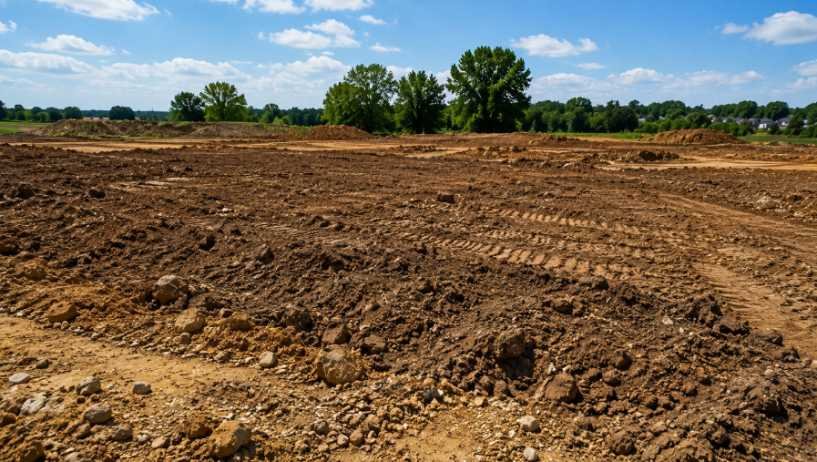
Steep slopes, narrow access, trees, retaining walls, wetlands, overhead lines, rocky ground, uncontrolled fill, soft sand, expansive clay, and shallow groundwater can all increase the price.
The geotechnical engineer may also need to investigate settlement, liquefaction, drainage, slope stability, permeability, soil improvement, or deep-foundation requirements.
Do permits and utility locating add extra fees?
Local building codes vary across the United States. Some municipalities require a stamped geotechnical report before issuing a residential building permit. Others require one only when the property has steep slopes, unstable fill, unusual geology, seismic exposure, or another recognized hazard.
Private utility locating or site-marking services may add approximately $200 to $500. The national 811 service itself is free and should be contacted before drilling so participating utility companies can mark the approximate locations of buried lines.
How much does expedited soil testing cost?
A straightforward residential investigation may take about two to four weeks, although scheduling delays, laboratory workload, and complex analysis can extend the process.
When I need a report quickly for a land closing, construction loan, or permit deadline, expedited processing may increase the total by approximately 20% to 40%.
Which Soil Test Do I Need Before Building a Home?
A geotechnical investigation evaluates soil stability, bearing capacity, groundwater, settlement potential, and appropriate foundation options.
A percolation test serves a different purpose. It measures how quickly water drains through the ground and helps determine whether a property can support a septic system.
Environmental soil testing may also be necessary when the land previously contained a gas station, agricultural operation, industrial building, landfill, or another use associated with petroleum, pesticides, lead, heavy metals, or hazardous materials.
I would never replace professional residential soil testing with a DIY kit. Garden kits may measure nutrients or pH, but they cannot establish bearing capacity, settlement risk, slope stability, or a safe foundation design.
How Can Soil Results Change My Foundation Cost?
Favorable test results may support conventional shallow footings or a slab-on-grade foundation. Difficult conditions may lead to over-excavation, engineered fill, moisture conditioning, wider footings, reinforced slabs, drainage improvements, piers, piles, or another specialized foundation system.
Some corrective work also falls outside safe homeowner capability. Reviewing renovation tasks you should not DIY can help me recognize when excavation, structural reinforcement, foundation repair, drainage correction, electrical relocation, or other high-risk work requires licensed professionals.
Those recommendations can increase my initial building budget. However, discovering unstable ground after pouring concrete is far more disruptive.
Emergency engineering redesigns and foundation remediation can cost $20,000 to $50,000 or more. A detailed report may also prevent unnecessary spending by giving the structural engineer site-specific information instead of forcing overly conservative assumptions.
How Do I Choose a Geotechnical Engineer?

I look for a firm with residential construction experience and a Professional Engineer licensed in the state where I plan to build.
Before hiring anyone, I ask how many boreholes the quote includes, how deep the crew expects to drill, which laboratory tests are covered, and whether the completed report will satisfy the local building department.
I also confirm the turnaround time, access requirements, insurance, payment schedule, utility-marking responsibilities, and charges for additional visits or report revisions. The engineer should also be willing to answer questions from my architect, structural engineer, lender, builder, or permit reviewer.
Comparing identical scopes gives me a more accurate picture than simply selecting the lowest advertised price.
Frequently Asked Questions
1. Is a soil report required before building every new house?
No nationwide rule applies equally to every residential project. Local building codes, slopes, fill soil, groundwater, foundation type, seismic exposure, and regional geology determine whether testing is mandatory.
2. Is a perc test the same as a geotechnical test?
No. A perc test evaluates soil drainage for septic-system planning. A geotechnical investigation evaluates the ground for foundation and earthwork decisions.
3. Can soil testing tell me which foundation to use?
The report provides soil and groundwater information that helps the structural engineer select and design an appropriate foundation. It may recommend shallow footings, a reinforced slab, engineered fill, piers, piles, or additional drainage.
4. Should I test the soil for radon before construction?
The EPA does not recommend soil testing as a reliable way to predict indoor radon levels in the completed house. Soil conditions can change during site preparation, and a low soil result cannot rule out a future radon problem. The EPA recommends testing the completed home.
Is Professional Soil Testing Worth the Price?
When I assess the soil testing cost before building a house, I compare it with my much larger investment in excavation, concrete, framing, and long-term structural performance.
Spending approximately $1,000 to $5,000 on qualified testing can reveal risks early, guide the foundation design, support the permit process, and prevent expensive construction surprises. The best value comes from appropriate fieldwork, reliable laboratory analysis, and practical recommendations from a licensed engineer—not simply the cheapest quote.